Enquiring Ear

Field recording and found sounds

Tag: transport

  • Lynton Cliff Railway

    Lynton Cliff Railway

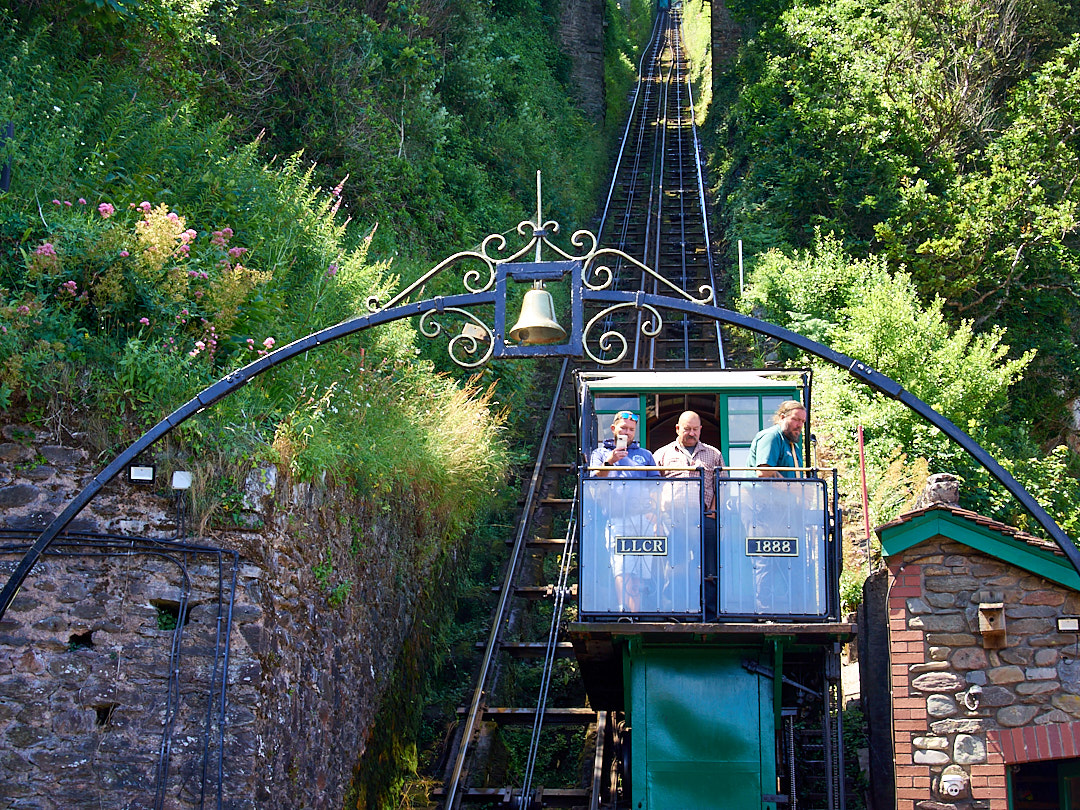
    The Lynton Cliff Railway1 runs between the upstation in Lynton, 500 feet about the downstation in Lynmouth. It’s certainly a walk worth avoiding!

    Start of the journey on the Lynton cliff Railway. Bell rings, gates are closed and the carriage starts to trundle down the track. This was built in 1890 and is water powered – water piped from the river is poured into a 700 gallon tank at the top station, and the carriage descends, which pulls the one at the down station up via the steel ropes. The water is discharged at the bottom.

    the upstation showing the pulley and cables running on rollers down the middle of the tracks

    The queue for the journey back was massive, so I walked back up. I stopped at the bridge over the track to record the sound of the cables running over the rollers along the middle of the track

    Bridge over the track – a z-shaped winding path

    The cars go up and down frequently so it doesn’t take too long to get one, but if the queue reaches the Exmoor information centre at Lynmouth as it did one day, it takes about half an hour to get to the carriage.
    1. Lynton and Lynmouth Cliff Railway website ↩︎
  • Sounds of Seaton Tramway

    Sounds of Seaton Tramway

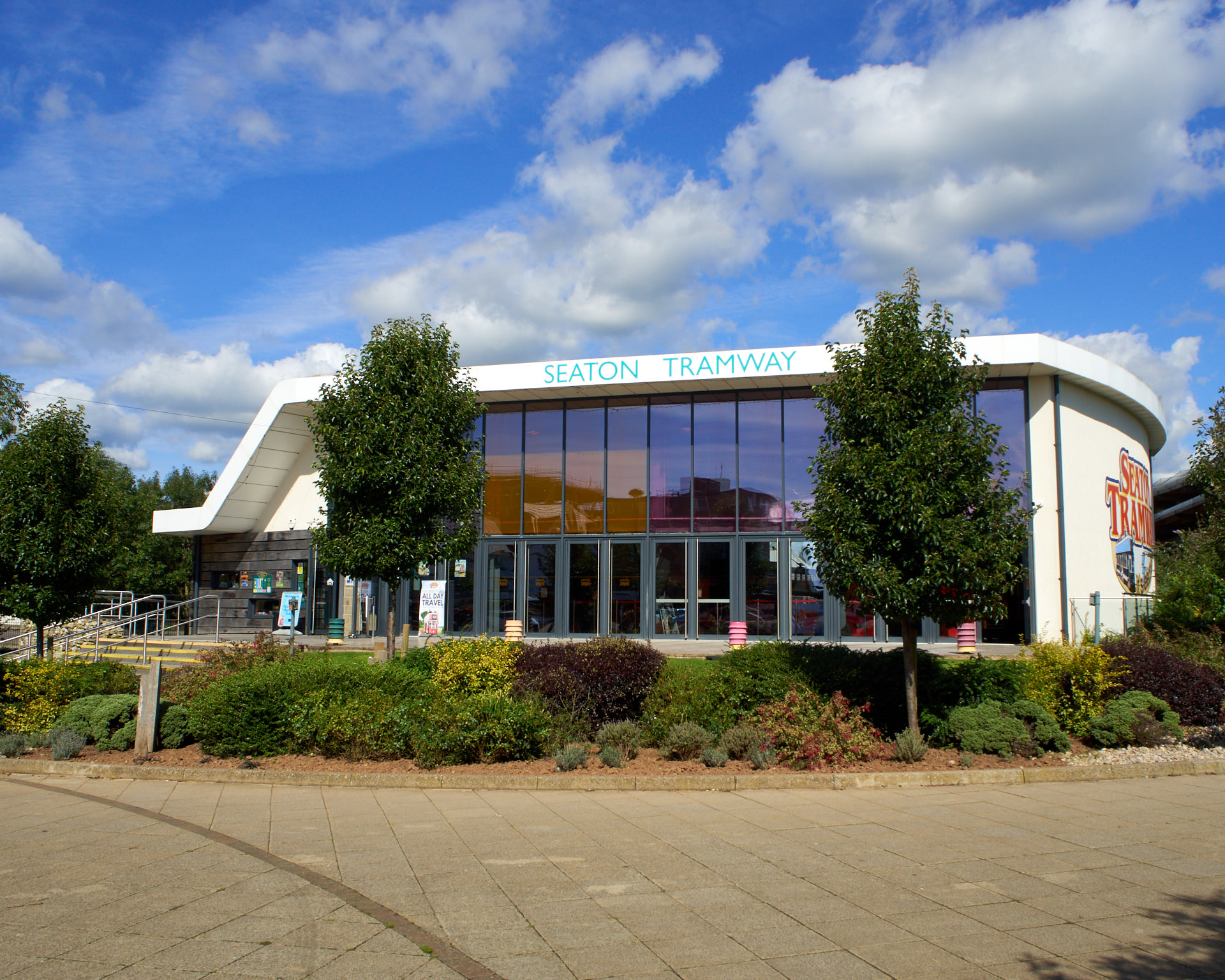
    Seaton Tramway were running open-top trams on a pleasant sunny September afternoon, bringing an unusual perspective to Colyford level crossing. I normally experience level crossings as a road user, and even from trains it’s usually only audible at one side.

    XY recording, Olympus LS14

    It’s a great way to overlook the Seaton Wetlands nature reserve. The driver pointed out this Kestrel on the tram power poles. We saw little egrets, grey herons, cormorants and some Curlew. They run occasional birdwatching trips on the tramway too.

    Kestrel

    The tramway makes an interesting sound running past – there must be a gearbox between the motor and wheels. The control system is quite rudimentary, you only have about four positions.

    The drivers control throttle, with limited speed positions

    You can hear this under load when the driver runs slowly, pulsing the power on and off.

    The recorded tram, photo taken from the station platform after the driver switched cabs for returning.

    The next recording is taken from the Colyton terminus, with a tram passing the platform to the terminus.

    XY recording, Olympus LS14

    Seaton Tramway has an interesting history. It uses some of the old trackway from Seaton Junction to Seaton. This branch line was taken out in the Beeching axe. Claude Lane was looking for a permanent site; Claude had run trams at Rhyl then at Eastbourne. He bought the trackway fron British Rail and he and an assistant moved the tram from Eastbourne. This took 36 lorry round trips from September 1969. The first passenger service at Seaton ran on the August Bank Holiday of 1970.

    The system voltage is 120V DC, with battery stations along the lines, presumably to minimise line losses at such a low voltage.