Enquiring Ear

Field recording and found sounds

Tag: London

  • Resonant sounds of London’s Museumland

    1411_qt_PB040667
    iconic Queen’s Tower at Imperial

    I went to university at Imperial College, in the chi-chi London district of South Kensington.  The area has much to offer the field recordist in terms of resonant public spaces. If you want to avoid the rain or simply enjoy the soundscape  you can take the long pedestrian tunnel under Exhibition Road from the tube station to the museums.

    I recently returned to Imperial and went to the Alumni reception who served excellent coffee, gratis. It’s a world away from the machine coffee and plastic cups and ‘coffee whitener’ that fuelled my studies in the Physics department many years ago. The entrance to the College from Exhibition Road is now an enclosed space with lots of glass and hard surfaces, it has an interesting acoustic of its own – I recorded this space from next to the statue of Queen Mary

    Footfall Foley wizards will hear the tapping aren’t high heels which most people would associate with the percussive sound but Blakeys on a man’s shoes.

    South Kensington has three lovely Victorian museums. Massive galleried spaces over several floors and often a curved vaulting ceiling. These are just made for binaural stereo!

    I went to the Science Museum in Exhibition Road, part of a cluster of Victorian Museum buildings. The others are the Victoria and Albert and the Natural History Museum. The latter has an amazing curved atrium and a fine acoustic space.

    In the Science Museum on the ground floor near the space exhibition

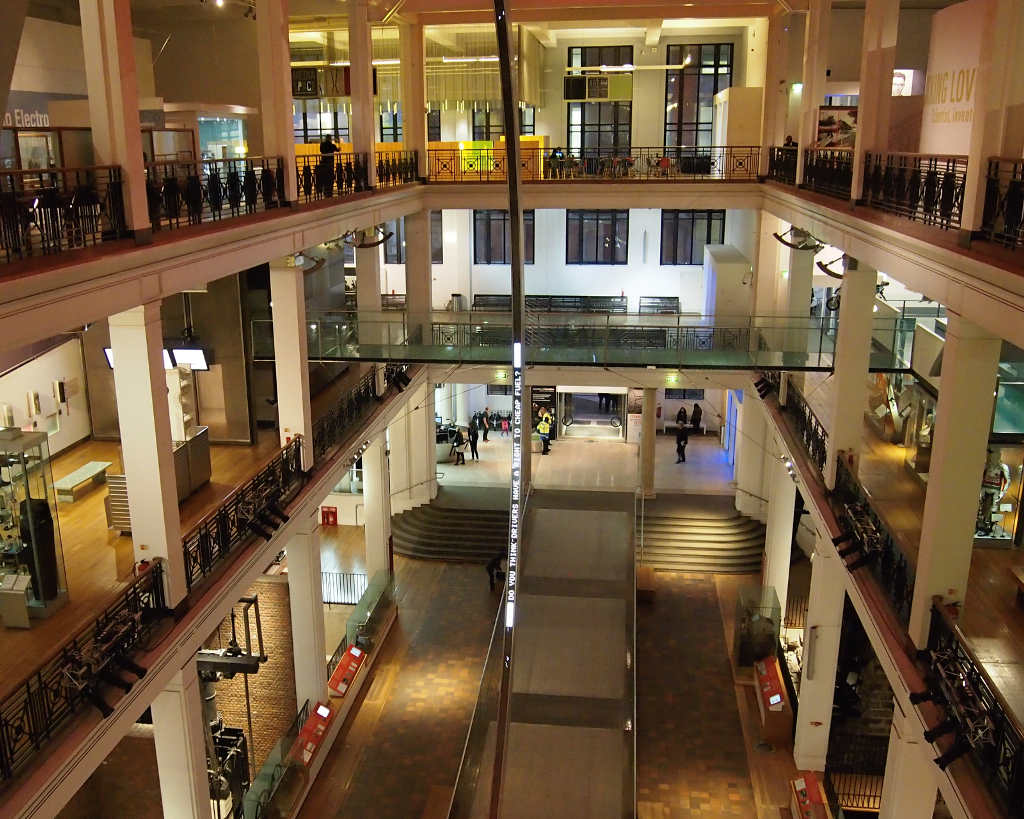
    the next recording is from the Energy exhibition on the second floor, looking over the massive open space to the steam engines on the ground floor

    OLYMPUS DIGITAL CAMERA

    the sharp snap at 00:32 is an art exhibit marked do not touch, which of course everyone touches, resulting in a spark and a slight shock to the curious.

    I enjoyed the visit and the incidental soundscapes. It is also good that Britain ended its dalliance with charging for museum entry.
  • Echoes of South Kensington Station

    Echoes of South Kensington Station

    South Kensington Tube station is the gateway to some of London’s famous museums – the Natural History museum, the Victoria and Albert and the Science Museum. To save people getting wet or wrangling the traffic along Exhibition Road, there is a long pedestrian walkway from the station to the museums.

    It has a fabulous acoustic, one that’s enjoyed by small children, buskers and field recordists alike! I went to university at Imperial College and used this tunnel often. Even now, the soundmark takes me back to student times…

    Here’s the sound of a busker using the acoustic well, and some kids enjoying the tunnel later on

  • St Paul’s Cathedral Bells and massive reverb from glass-fronted financial district buildings

    St Paul’s Cathedral Bells and massive reverb from glass-fronted financial district buildings

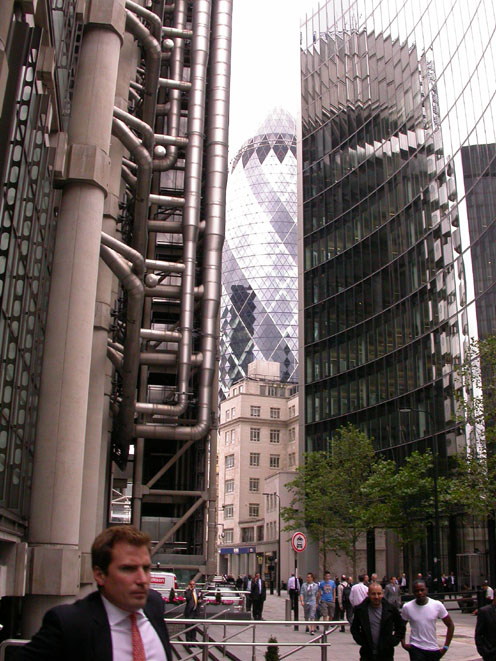
    St Paul’s Cathedral is only a stone’s throw from the tall glass-faced buildings of London’s financial district. I was sitting in the gardens of the cathedral, and the bells sounded really odd, as if there was an organist following on after then about 2 seconds late. This must be the echo coming from the glass-fronted buildings about 0.5km away, it does nothing for the tone

  • Canary Wharf Shopping Mall

    Canary Wharf Shopping Mall

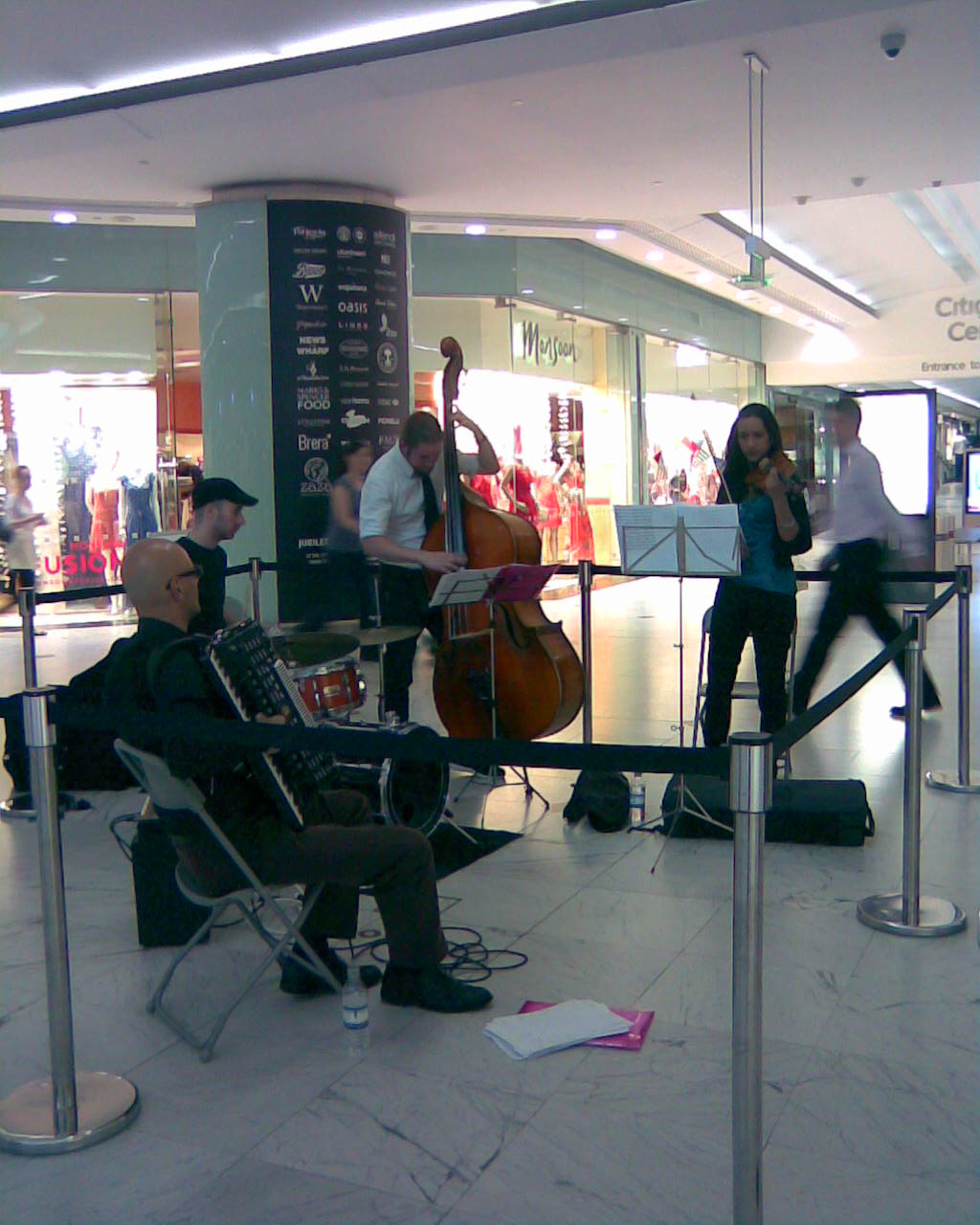
    Some upmarket busking in the ground floor Canary Wharf shopping mall

  • Routemaster Bus

    Routemaster Bus

    1 min short, including the classic ding ding – hold tight

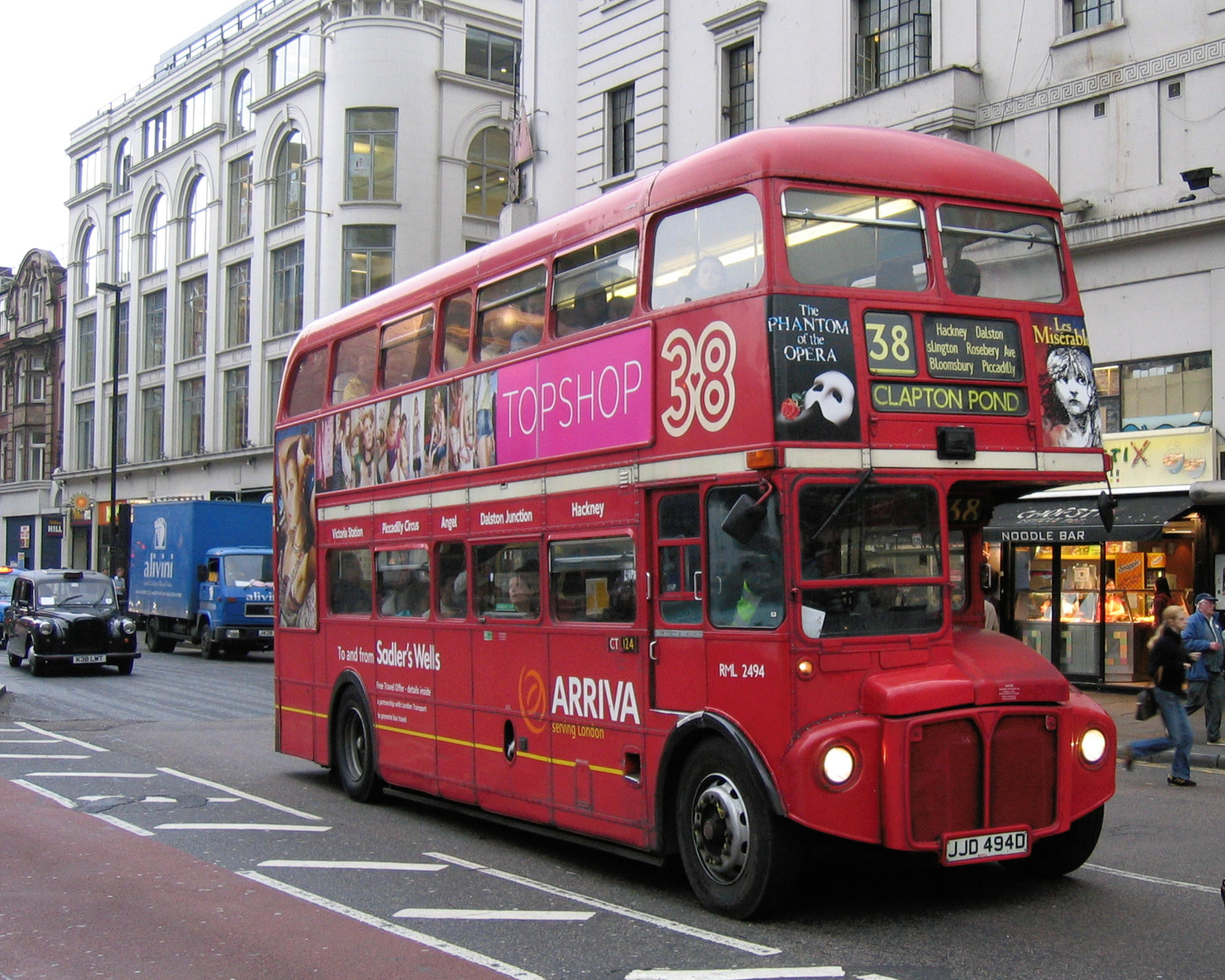
    The charismatic London bus is gone from the streets of the city. I recorded one in 2005, as they were being phased out. There are many sites dedicated to keeping the memory of these alive, but not so many dedicated to one of the aspects many Londoners will remember them by – their quite unusual sound.

    Part of their sound  was a result of the dynamic between the conductor, passengers, and the driver. Unlike modern buses the driver was in his own compartment and never had anything to do with the public. That was left to the conductor, who collected fares and managed the starting and stopping of the bus by signals on the bell, which was the only means of communication with the driver other than the buzzer which performed the same function from the top deck and the open platform.

    The bell was mechanical – a cord ran the length of the ceiling of the bus halfway over the left-hand row of seats. This cord went through the front wall of the passenger compartment to a clapper. When the cord was tugged, the bell sounded and both the driver and the passengers could hear it.

    In London Transport usage, the bell signals were as follows-

    • One ring. This was for passengers, to indicate  they wanted to get off at the next request stop. This was the only signal passenegrs were meant to sound, though obviously the temptation could get too much for London’s schoolkids at times.
    • Two rings. The conductor signals to the driver that everybody has boarded and disembarked from the bus and he can move off
    • Three rings. This depended on context – the most common was cancel the two ring move off instruction just given (either in error, or by one of the schoolkids) However, it could also mean ‘don’t stop at the next stop to take on more passengers as the bus is full and nobody is getting off’

    and every frequent user knew the familiar sound of the conductor calling out ‘hold tight’ followed by a ‘ding ding’ of the bell.

    The Routemaster had a really unusual engine and transmission sound. I believe that in the early 1970s they had a manual transmission, but this was replaced over that decade by an odd kind of automatic transmission. The engine was in the front, unlike most modern buses, and there was a bell-housing which protruded into the passenger compartment slightly just behind the driver – the passengers in the aisle side of the first row of seats could rest their foot on this. This was the seat I took to record the friendly sound of this bus, with its distinct speed-dependent tone, odd idling characteristics and typical squeal of the brakes.

    These buses were about 50 years old when they were retired later on in the year. It took several goes to get a photo of a bus that was in reasonable visual condition.

    recorded 12 April 2005