I wandered down what looked like a tranquil pedestrian lane away from the Hereford shopping crowds. Mansion House Walk in Hereford near the town centre.
Looking towards the shops from Mansion house walk
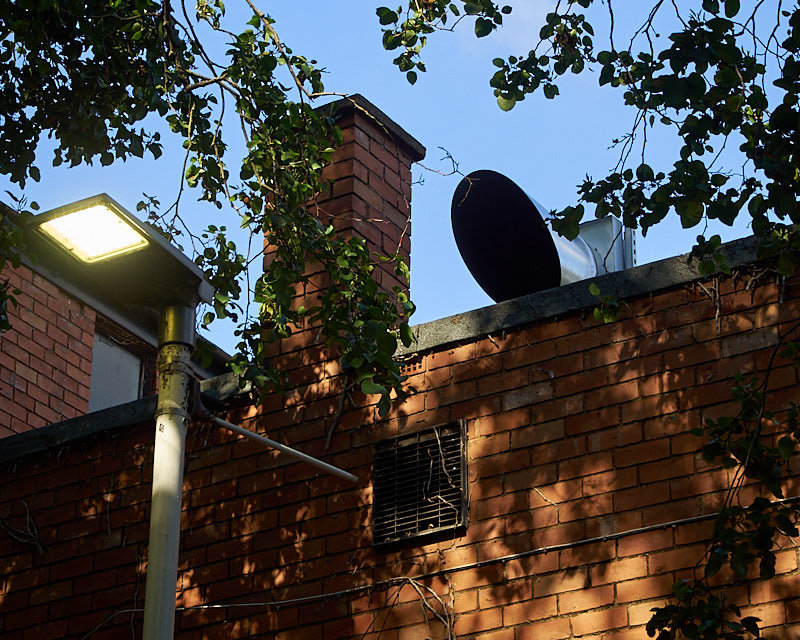
I heard this mesmerising nimbus roar from a commercial kitchen HVAC. That was the wide silvery tube in the header pic
Not something you want to live next to! Fortunately there don’t seem to be any houses or flats nearby.
I love the sound of willow warblers, for a long time I had only heard them in Scotland, where they aren’t so fussy about willow. When I lived in Suffolk I heard them very rarely.
Somerset has plenty of willow on the Levels, and it has a good number of Willow Warblers with their lovely liquid song. Here one seems to be duking it out for territory with a Chaffinch
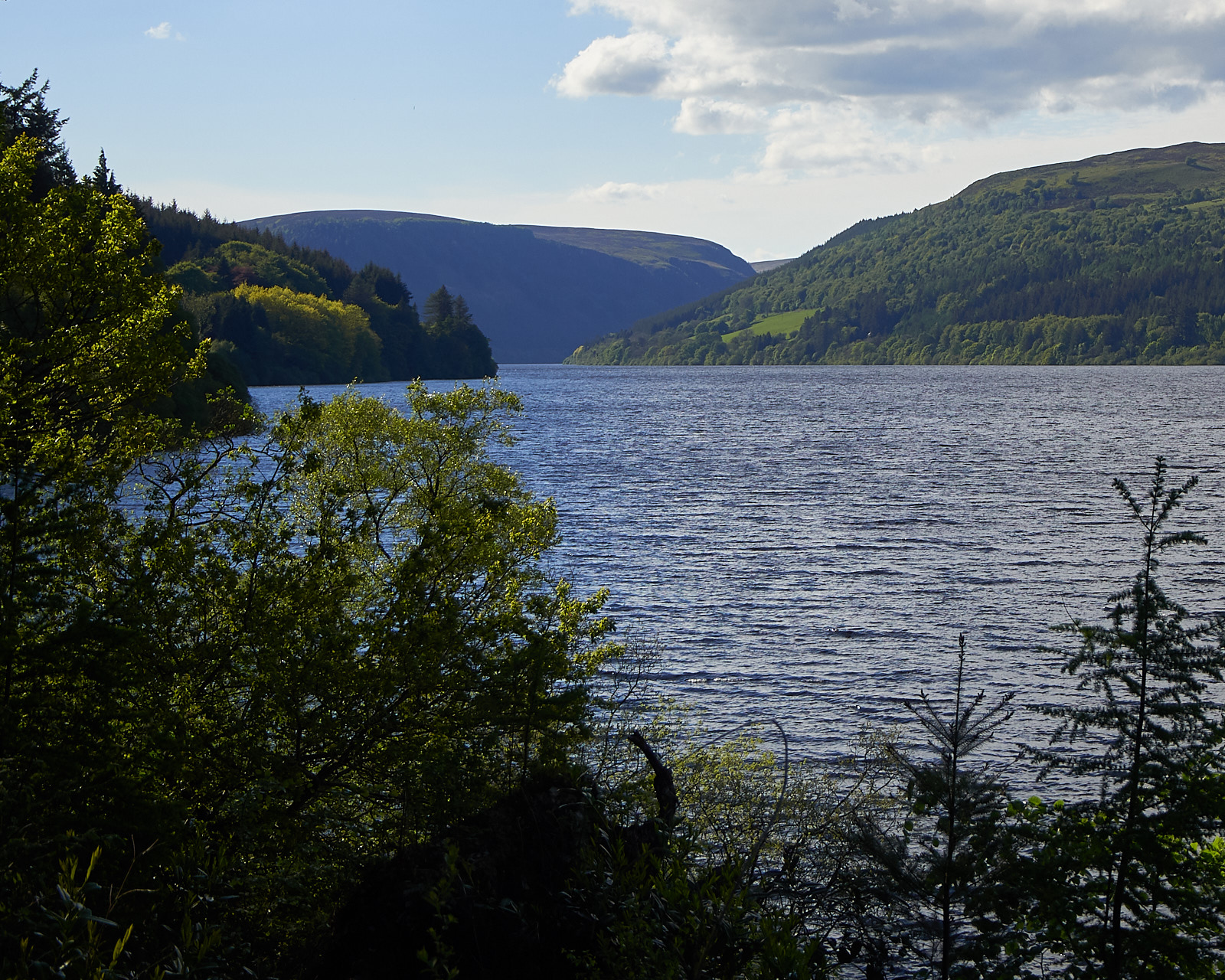
Lake Vrynwy is a RSPB reserve which has a lovely ambience and little noise pollution. Geese and cuckoos in the morning, from the south side of the lake
The South-West coast path takes you high up on the cliffs overlooking Beer beach. A robin was signing, with a background of crows and the waves from a distance.
This is the supposed landing place for St Columba and his band of 12 monks when they landed in 563. This was first landfall from where they could not see Ireland. It was brave, setting out in a coracle, but God was on their side 😉
It’s a little bit of a hike from the road. At the end you are rewarded with a bracing breeze and the small bay.
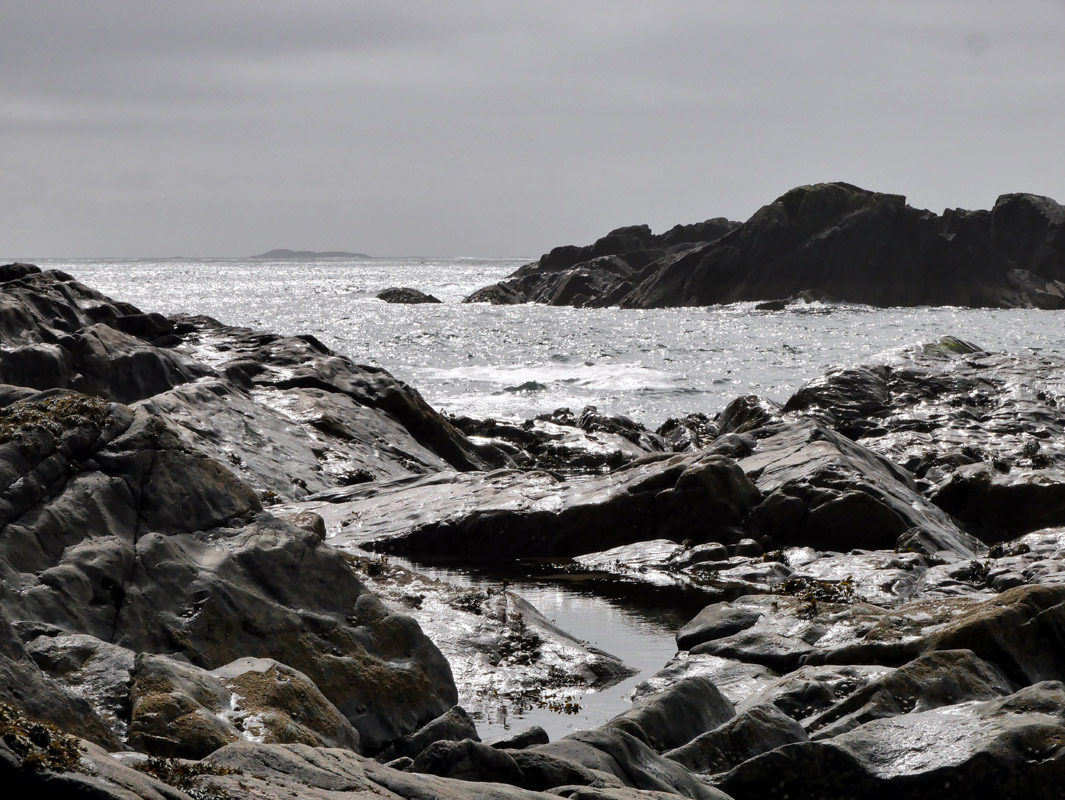
The Vikings raided the island in 802, arriving on the north beach. The sea sounds different there
Wind is normally the enemy of sound recordists, but going through some recordings from last year I found this recording of ex-hurricane Ophelia from the 16th October 2017. Ophelia had been pretty nasty originally and was still bad when it got to Ireland.
I recorded it in Glastonbury in the south-west, by finding a sheltered spot and pointing the mic in a windshield at a bunch of trees, which made a good recording given the wind. The key was that I had good shelter at the mic, but the trees were exposed to the full force of the wind.
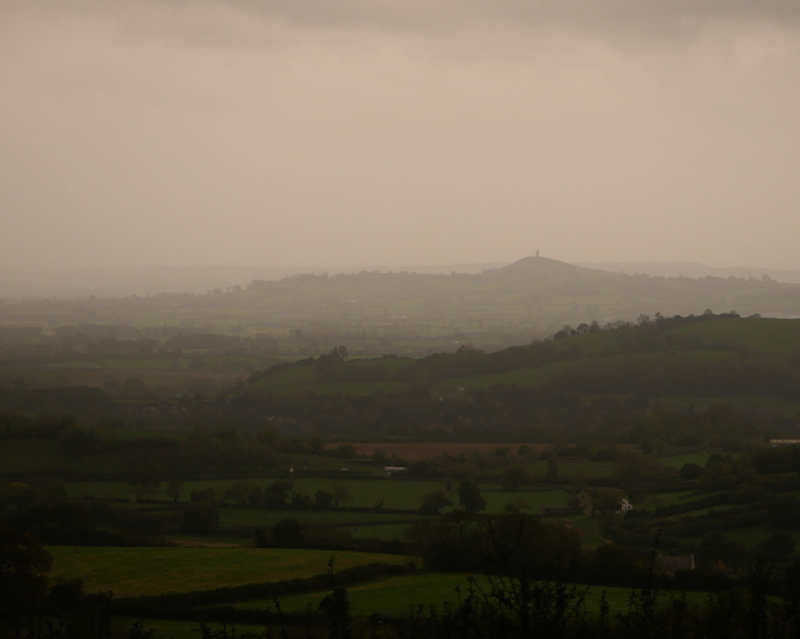
The storm dragged up a load of Saharan dust, making the sky the sickly yellow in the pic.
The Fonnereau Way has been used since the mid-1800s, although it’s been the subject of a fight when a incoming resident at the Westerfield end tried to block it up and have it stopped on several occasions. Network Rail has also had it in for the pedestrian level crossing but have also failed to have it struck off.
The Fonnereau Way is the mainly vertical line to the left, with a bridge to put ‘elf’n’safety at Network Rail out of its misery
Becoming a housing estate will clearly change this part of the Fonnereau Way, so I walked this to capture some pictures and soon to be historical sounds from the route. The farmland is intensively farmed and heavily sprayed as I’ve observed a few times, it’s quite possible that being turned into a housing estate may actually increase the biodiversity. Although the birds will be persecuted by hundreds of domestic cats and the gardens will no doubt be tiny, the farmland doesn’t support that many birds at the moment.
The Fonnereau Way starts from Christchurch Park, but I started where the changes will be made, where it crosses Valley Road. In the local plan all vehicle access will be from Henley Road rather than Valley Road.
the nondescript entrance to the Fonnereau Way from Valley Road
and it’s a noisy place. It gets better quickly as the old path threads its way past some sports facilities and the playing fields
before reaching farmland
There are a few birds in the farmland, but to be honest the urban Brunswick Road Rec has more diversity to my ears, the birds are few and far between
I went to university at Imperial College, in the chi-chi London district of South Kensington. The area has much to offer the field recordist in terms of resonant public spaces. If you want to avoid the rain or simply enjoy the soundscape you can take the long pedestrian tunnel under Exhibition Road from the tube station to the museums.
I recently returned to Imperial and went to the Alumni reception who served excellent coffee, gratis. It’s a world away from the machine coffee and plastic cups and ‘coffee whitener’ that fuelled my studies in the Physics department many years ago. The entrance to the College from Exhibition Road is now an enclosed space with lots of glass and hard surfaces, it has an interesting acoustic of its own – I recorded this space from next to the statue of Queen Mary
Footfall Foley wizards will hear the tapping aren’t high heels which most people would associate with the percussive sound but Blakeys on a man’s shoes.
South Kensington has three lovely Victorian museums. Massive galleried spaces over several floors and often a curved vaulting ceiling. These are just made for binaural stereo!
I went to the Science Museum in Exhibition Road, part of a cluster of Victorian Museum buildings. The others are the Victoria and Albert and the Natural History Museum. The latter has an amazing curved atrium and a fine acoustic space.
In the Science Museum on the ground floor near the space exhibition
the next recording is from the Energy exhibition on the second floor, looking over the massive open space to the steam engines on the ground floor
the sharp snap at 00:32 is an art exhibit marked do not touch, which of course everyone touches, resulting in a spark and a slight shock to the curious.
I enjoyed the visit and the incidental soundscapes. It is also good that Britain ended its dalliance with charging for museum entry.
A neighbour was having cavity wall insulation installed. This seemed to be polystyrene beads about 3mm diameter blown into a hole drilled from the outside. The machine makes a prodigious racket.
A truck was parked on the road and a massive compressor started up. The noise increased when the beads were loaded up, from big plastic sacks. Job was done in a day and a bit.
I still wonder what happens to that sort of thing in a fire. It’s better contained than the ghastly polystyrene tiles people used to insulate ceilings with decades ago. This continued until the fire brigade public service ads on TV about what happened in a fire. Polystyrene still produces nasty fumes, however.