
The mating call of the nightjar is a very strange churring sound, usually made around dusk, hence the ropey photo. The sound is eerie, as most other birds have stopped by the time this call is made. The claps are wingbeats.
Field recording and found sounds
Target recordings are those made of a specific sound or sounds which are distinct from the background atmosphere or the location in which they occur.
The mating call of the nightjar is a very strange churring sound, usually made around dusk, hence the ropey photo. The sound is eerie, as most other birds have stopped by the time this call is made. The claps are wingbeats.

This guy had chutzpah. setting up with a few boxes of bananas and the aim of flogging them all in a day. He delivered his patter with gusto
1 min short, including the classic ding ding – hold tight
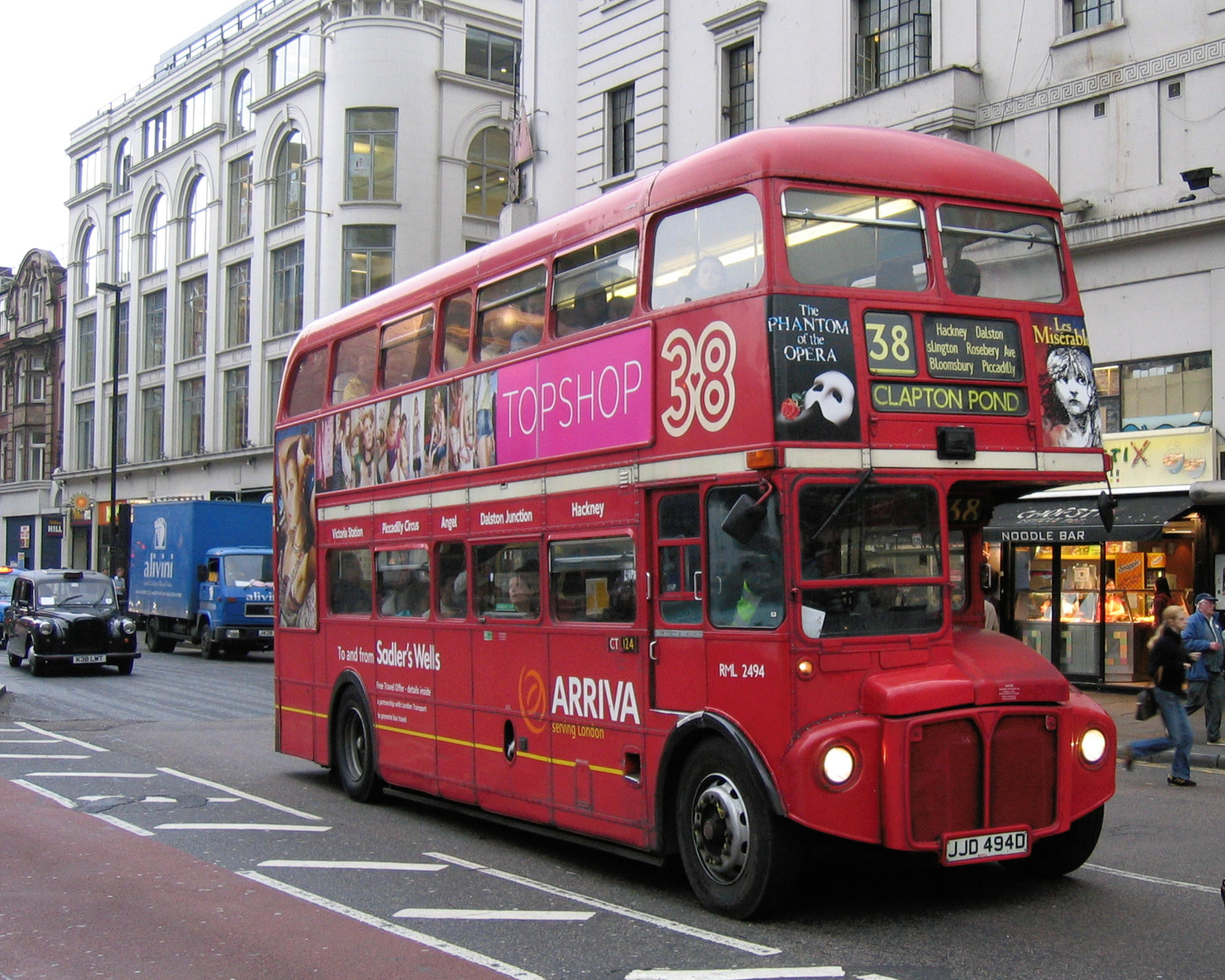
The charismatic London bus is gone from the streets of the city. I recorded one in 2005, as they were being phased out. There are many sites dedicated to keeping the memory of these alive, but not so many dedicated to one of the aspects many Londoners will remember them by – their quite unusual sound.
Part of their sound was a result of the dynamic between the conductor, passengers, and the driver. Unlike modern buses the driver was in his own compartment and never had anything to do with the public. That was left to the conductor, who collected fares and managed the starting and stopping of the bus by signals on the bell, which was the only means of communication with the driver other than the buzzer which performed the same function from the top deck and the open platform.
The bell was mechanical – a cord ran the length of the ceiling of the bus halfway over the left-hand row of seats. This cord went through the front wall of the passenger compartment to a clapper. When the cord was tugged, the bell sounded and both the driver and the passengers could hear it.
In London Transport usage, the bell signals were as follows-
and every frequent user knew the familiar sound of the conductor calling out ‘hold tight’ followed by a ‘ding ding’ of the bell.
The Routemaster had a really unusual engine and transmission sound. I believe that in the early 1970s they had a manual transmission, but this was replaced over that decade by an odd kind of automatic transmission. The engine was in the front, unlike most modern buses, and there was a bell-housing which protruded into the passenger compartment slightly just behind the driver – the passengers in the aisle side of the first row of seats could rest their foot on this. This was the seat I took to record the friendly sound of this bus, with its distinct speed-dependent tone, odd idling characteristics and typical squeal of the brakes.
These buses were about 50 years old when they were retired later on in the year. It took several goes to get a photo of a bus that was in reasonable visual condition.
recorded 12 April 2005
Resonant Bridge, contact mic

Resonant Bridge, contact mic with no mass coupling to back of element
Resonant Bridge, contact mic with mass coupling to back of element
To a man with a contact mic mounted on a magnet, every sound source looks like a large lump of steel, same way as the guy with a hammer sees nothing but nails…
My luck was in when I came across this concrete footbridge across a dual carriageway. So I set up, carefully placing myself over the central reservation so drivers don’t get paranoid I’m about to zap ’em with a speed camera or throw stones or drop magnets on them. You get some funny looks attaching magnets and a piece of wire to a bridge by the other people, and the regional Police HQ is only 1/2 mile away. This unpreposessing bridge has a decent tone to it, presumably ringing to the vibration of the traffic passing by. Which was awesomely noisy – you don’t realise just how loud the tyre noise is on a road until you try and cycle a stretch like this and find your ears ringing afterwards. The contact mic worked its usual magic in getting rid of all this racket.
Resonant Bridge, traffic noise, OKMII binaurals w battery box
The two recordings with the contact mic were made, one with the mic held to the bridge with a strong magnet, the other with the same mic held to the bridge in the same way, but with an approx 0.5kg weight acting as a reaction mass on the other side of the piezo, to see if this picked up low frequencies better. You can hear the difference – or not, for yourself!

Piezo contact mics seem to cause a lot of pain for people losing low frequencies, but I do not feel I am short of low frequencies here, using a basic FET buffer. The peaks of the bridge resonance are 120Hz, 240Hz, 380Hz, 760Hz. There is, however, energy at 22 and 43 Hz at -36dB on the resonant peak, at a similar level to the broad peak around 3kHz which is probably the percussive sounds amplified by the piezo self resonance. The piezo was a Maplin YU87U 27mm 1.8kHz item terminated in 3.9Mohms, but the circuit could be improved to work better with a HiMD recorder mic input of 5k.
Now here’s a sound I haven’t heard for a while – an ice cream van
The chirping of the local sparrows start off the clip, then as the van comes round the corner the kids get excited and the honky tonk sound starts
I’m not sure if this is a genuine mechanical ice cream van seriously off tune or a recording of one. It has an odd combination of honky tonk untuned notes combined with what sounds like really rough distortion at the end, but the recording is not over 0dBFS and not so close as to compress the OKMII mics
Ain’t the web a wonderful thing. Apparently these have always been electronically amplified. They used to use a Swiss musical box amplified by vacuum tubes (valves) as long ago as the 1950s. Nowadays the amplification is electronic, and, ideally, output using Grampian Horn narrowband speakers aimed at the road surface. The Swiss clockwork has long been replaced by an electronic chip to synthesise the tunes. Beats me what is wrong with a CD of the music box – you could have up to 99 different chimes that way. However, that isn’t the way it’s done. Thanks to Tom at MusicThing for the heads up
from 25 June 2006

1 min continuous chirping
There’s something about rain that brings out the chirp in sparrows. I counted 12 of them, but the sound of this lot in the ivy and elder bushes sounds like a lot more. Why do sparrows all get up a chirp when it rains?
recorded from Maplin electret inserts on tree at 44.1kHz PCM to a PC via mic preamp. High-pass filtered from 440Hz at 12dB/octave to reduce traffic noise
I had a loop recorder running for a while, and this cat fight turned up. It’s a sound I associate with balmy summer nights rather than October usually.

Windmill in 15mph wind 1 min 10s
Some subjects you know are going to be a challenge. A wind generator, not surprisingly, needs wind and this was recorded in a 15-17mph northeasterly wind. That’s not the sort of weather made for easy sound recording!
This recording was taken about 100m from the generator at Lowestoft. The sound probably impacts about 500m away at this location next to the sea. This generator is sensitively sited in a really ugly industrial part of town next to a gasometer, and is visually reasonably well shielded from the town.
A gull turned up later and made a nice counterpoint to the blades
recorded 19 Feb 2006